A dead corner is any part of a shop customers do not look at. It is not a design flaw so much as a consequence of how people move: shoppers drift along the path of least resistance, and whatever sits off that path stops selling. In a convenience store, where every square metre has to earn its place, a dead corner is not a cosmetic problem. It is shelf space you are paying rent on and getting nothing back from.
Where dead corners come from
Two things create them: the shape of the shop, and the height of the shelf.
Shop shape. A square floor plate is the least likely to have dead corners, because a shopper walking any line through it passes most of the fixtures. Few operators get a square shop. L-shaped units are the common problem case: customers circulate near the entrance and rarely turn the corner into the short leg, so that leg goes cold no matter what is on the shelves.
Shelf height. Even in a well-shaped shop, two shelf levels are dead by default. The bottom shelf is below the natural sightline, and anything above roughly eye level is out of reach and out of view. Add a badly lit corner and you have three zones customers never register.
Four ways to bring a dead corner back
1. Design it out before you fit out
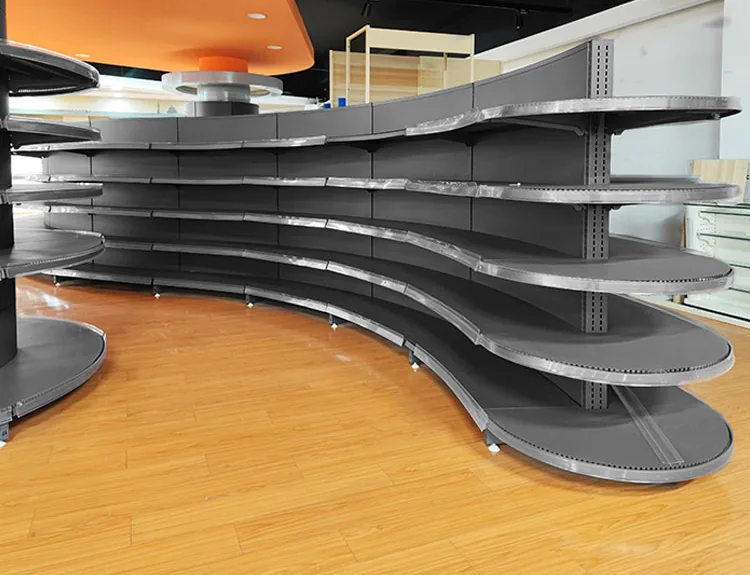
The cheapest fix is the one made on the drawing. Plan every metre of the floor before ordering fixtures, and treat awkward corners as a fixture problem rather than something to work around later. One operator with a curved wall had the shelving made to follow the curve rather than boxing it in. Shoppers who are used to straight runs find a curved one novel, so they follow it round, and the merchandise ends up presented through a wider arc than a square end bay would allow.
2. Use low shelving to open the sightline
Running low fixtures at the front and taller ones behind, or using low shelving throughout, lets a customer standing at the entrance see all the way into the far corner. Visibility is the whole battle: a corner that can be seen from the door is not a dead corner. This is the single most effective change in a small store, and it costs nothing beyond specifying the right shelf height at the order stage.
3. Put a floor stack in front of the cold zone
A floor display or promotional stack placed just ahead of a cold area interrupts the walking line and gives customers a reason to stop there. Once they have stopped, the shelving behind them is in view.
4. Light it and sign it
Dead corners are usually darker than the rest of the shop. Brighter or coloured lighting, a clear category sign, or a piece of distinct decoration all pull the eye. This is the lowest-cost intervention on the list and often the one left undone.
What to do with the shelf levels nobody looks at
The bottom shelf and the top shelf will never be prime real estate, so stop merchandising them as if they were. The bottom shelf suits bulk, heavy and multipack lines, the things a customer specifically comes for and will bend down to find. Above eye level suits stock display and slow-moving lines, or reserve facings that reduce how often staff have to replenish.
The fixture decision behind all of this
Most dead corner problems trace back to a fixture spec made without a layout in mind. Shelf depth, shelf height and run length determine what a customer can see from where they stand, and those are decided when the order is placed, not when the shop opens.
Our convenience store shelving page covers how the configuration differs from a supermarket, including why 300 to 400 mm bays usually beat deeper ones in a small footprint. For the sales floor systems themselves see gondola shelving, and for the front of store see checkout counters.
If you have a floor plan with a corner you cannot make work, send it over. We will come back with a shelving configuration rather than a price list.