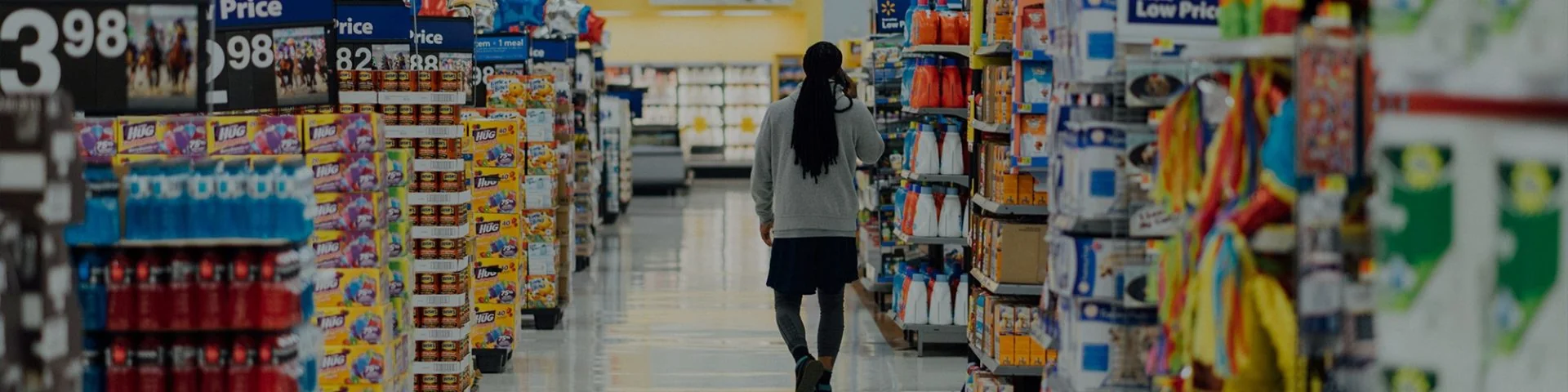
Sales floor
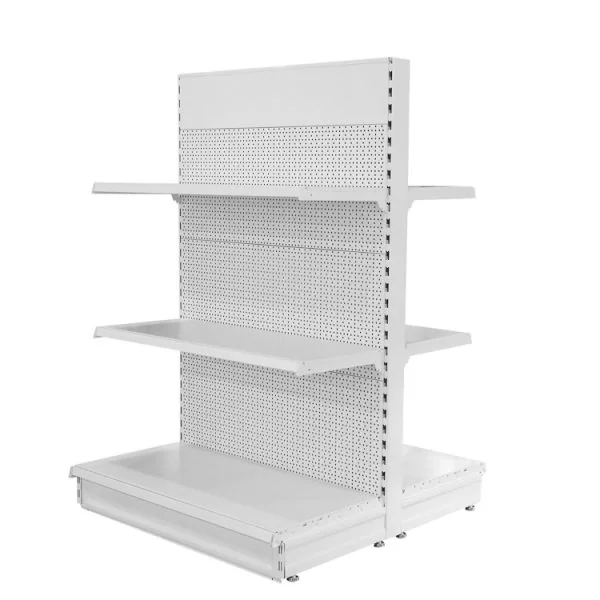
Supermarket Gondola Shelving
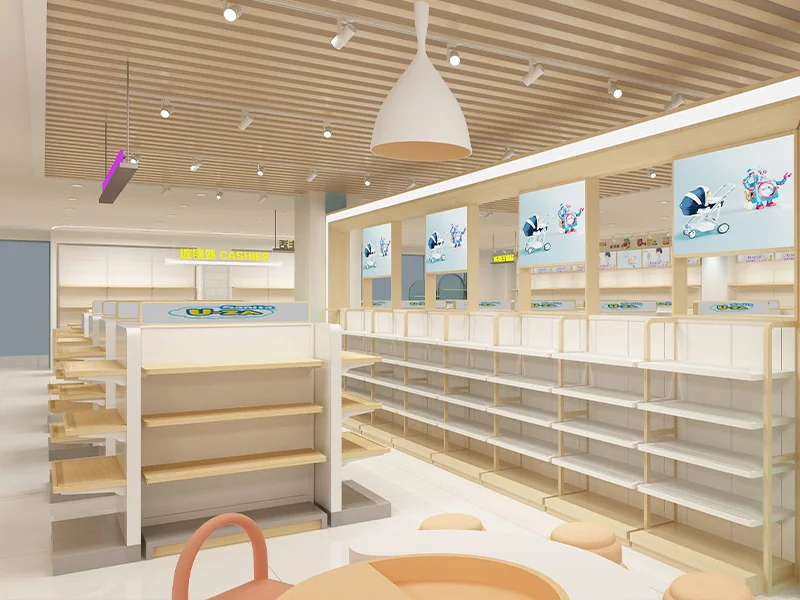
The same gondola system as a supermarket, specified shallower. A 300 to 400 mm bay holds the pack sizes a convenience store actually carries without eating the aisle.

The same gondola systems as a supermarket, configured shallower and shorter for a small footprint.
A convenience store sells the same categories as a supermarket out of a tenth of the floor. That changes the fixture spec in a specific way: the gondola gets shallower, the runs get shorter, and every bay has to earn its place because there is no room for a slow aisle. JTD Jinta builds convenience store shelving on the same S50 and hole-back systems as our supermarket lines, just configured for the smaller footprint.
Each line below does one job on the floor. They are listed in the order the decisions have to be made, because each one constrains the next.
The same gondola system as a supermarket, specified shallower. A 300 to 400 mm bay holds the pack sizes a convenience store actually carries without eating the aisle.
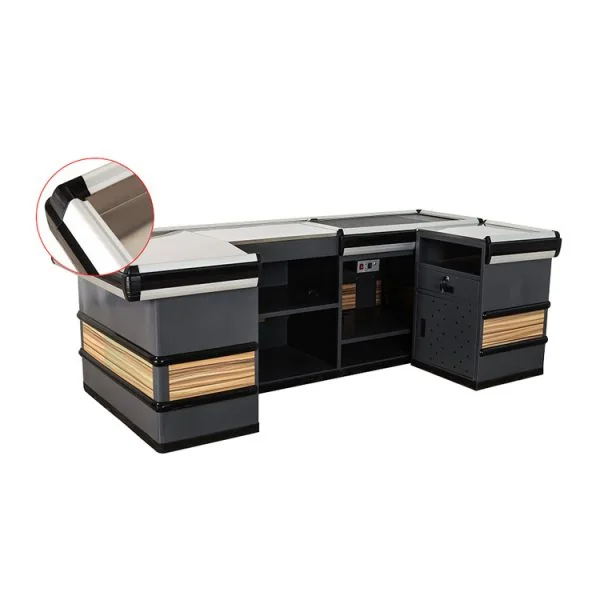
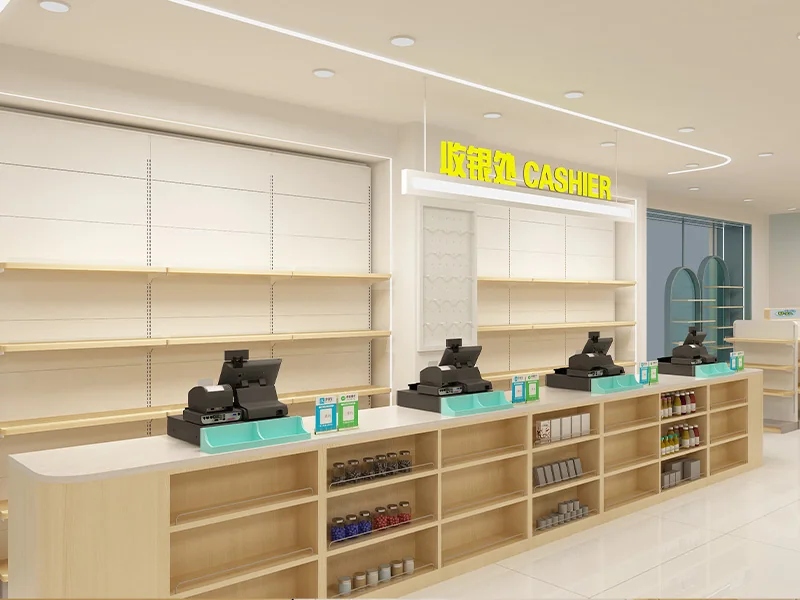
In a convenience store the counter is also the impulse display and often the service point. It is usually the single most valuable square metre in the shop.
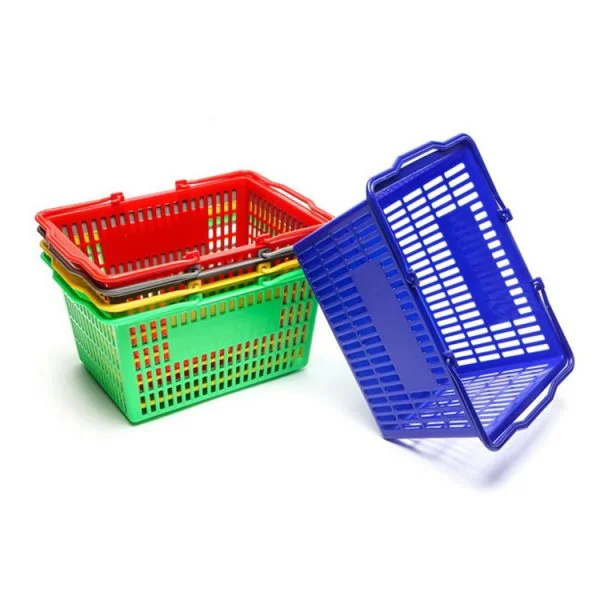
Most convenience stores are basket-only. Trolleys need aisle width the floor plan cannot spare, and the average basket size does not justify them.
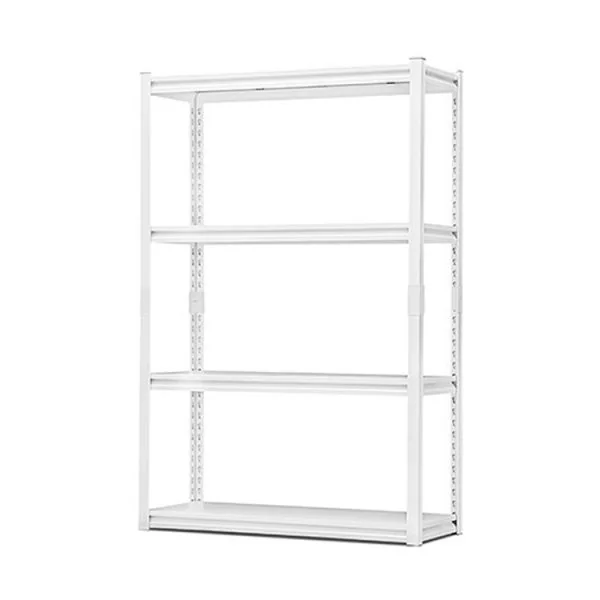
Boltless shelving assembles without tools, which matters when the stockroom is a converted back room and the fit-out crew is not coming back.
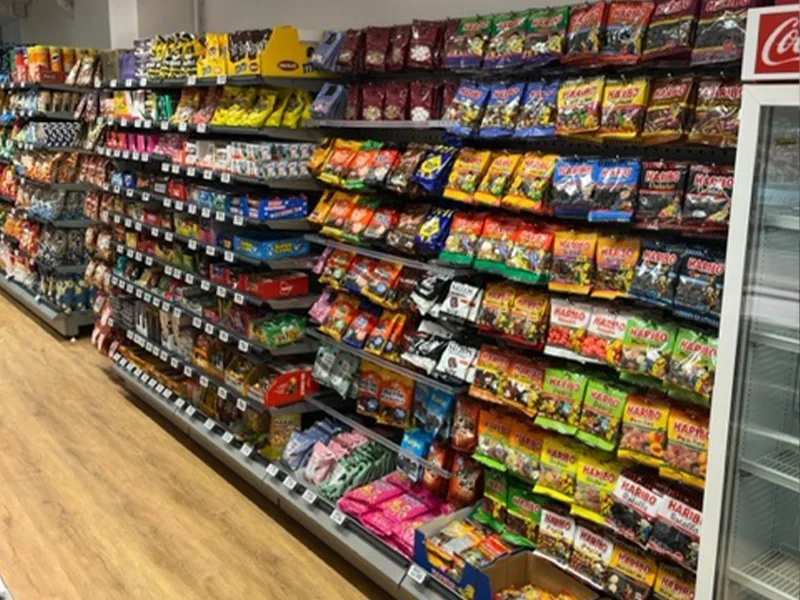
Going from 400 mm to 300 mm deep across a run gives back 200 mm of aisle for every pair of facing bays. In a store this size that is the difference between two customers passing and one waiting.
Trolleys need roughly 1,200 mm of clear aisle to pass. Most convenience floor plans cannot give that up, and the basket shopper converts fine without one.
It carries the till, the impulse lines, often the tobacco or service window, and the queue forms against it. Size it before you finalise the last gondola run, not after.
Forecourt stores get short, high-frequency visits. Keep the highest-margin impulse lines within sight of the door and the counter, and do not put a tall run between them.
Fit-outs supplied with JinTa fixtures in Britain, Denmark. Tap any photo to enlarge.
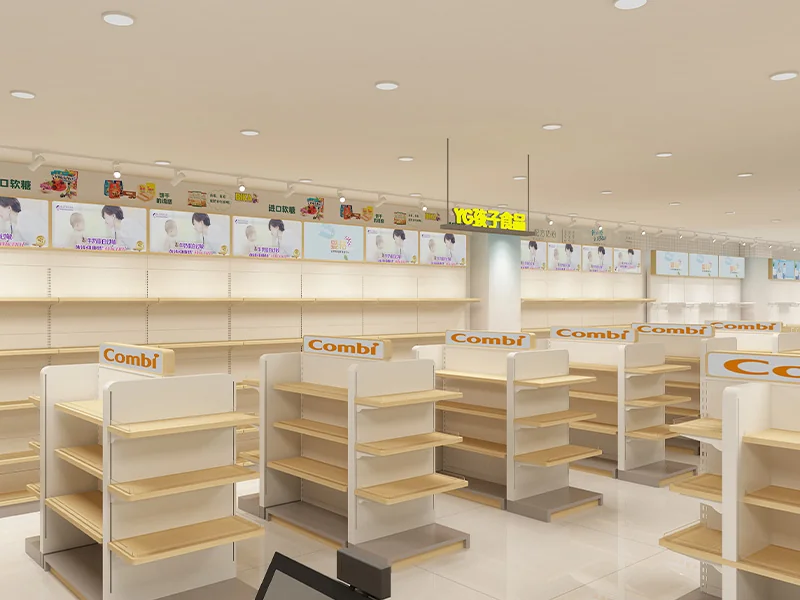
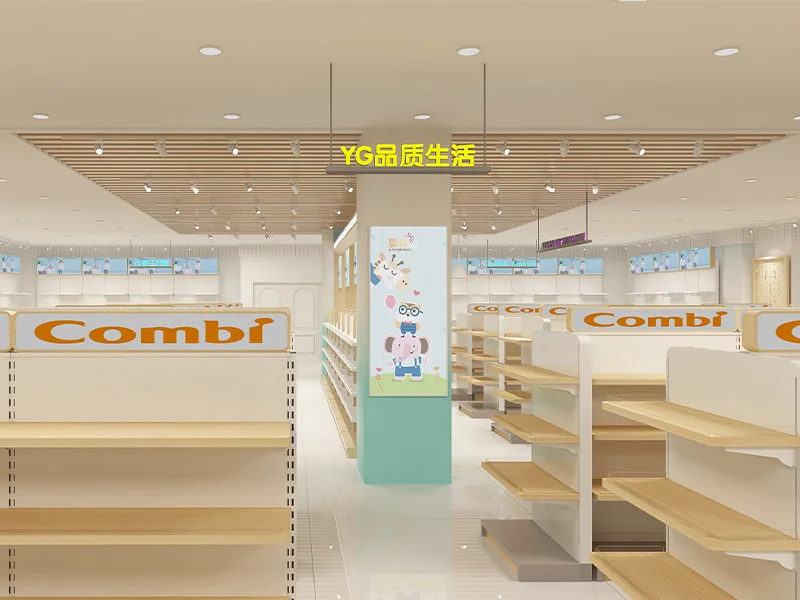
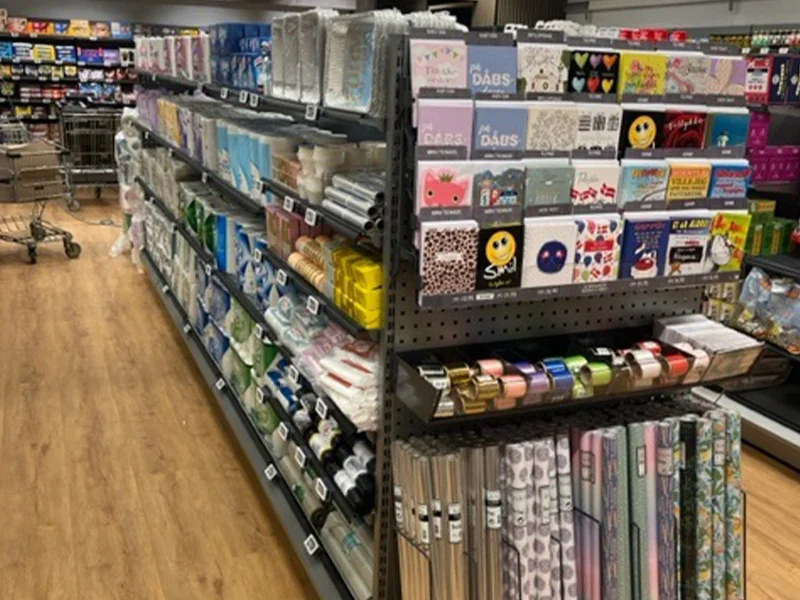
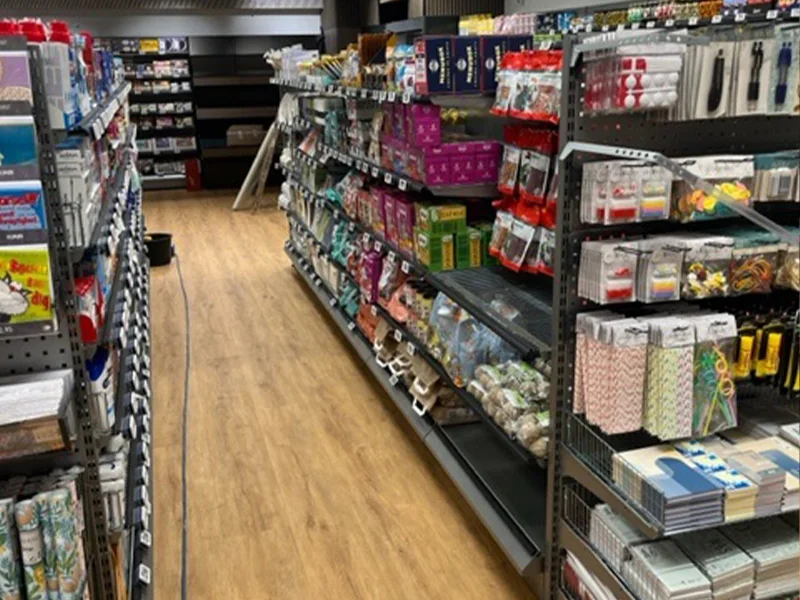
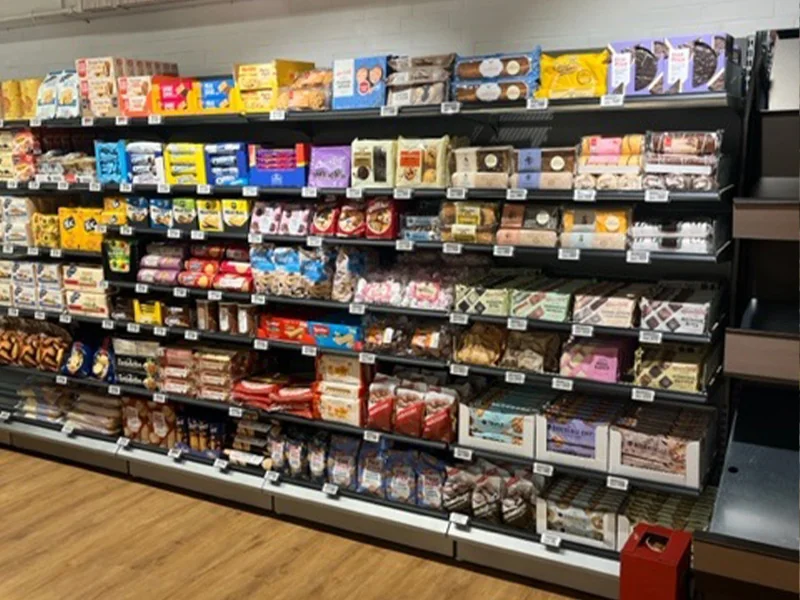
Same plant, same four-line logic — what changes is the configuration. A convenience store needs the same gondola in a shallower depth; a fashion floor swaps shelves for rails. Pick the format closest to yours.
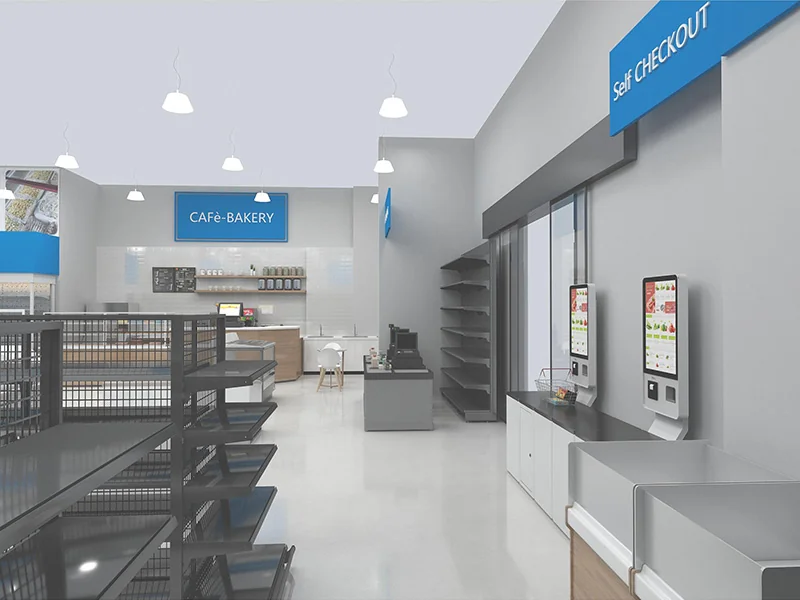
Gondola runs, checkout counters, trolleys and stockroom racking, sized to one aisle plan and shipped together.
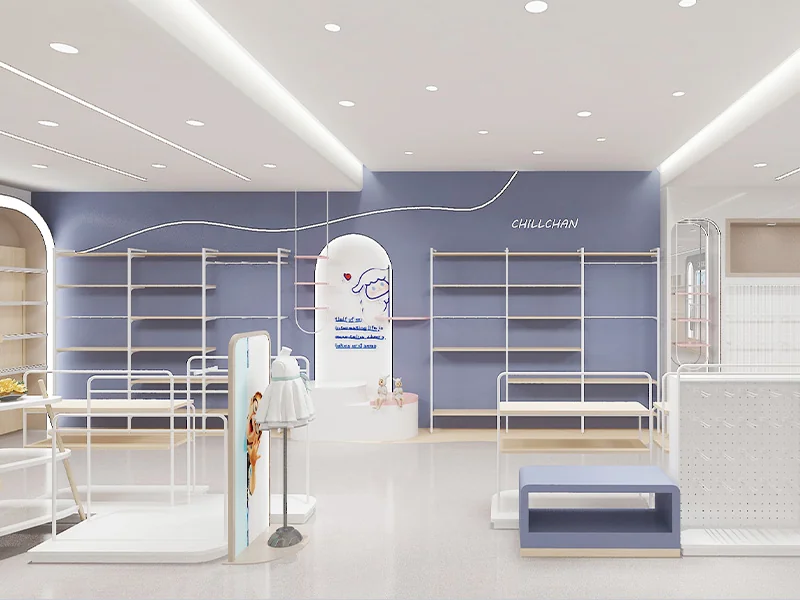
Shelving, display fixtures and counters powder coated to your colour, held to one spec across a chain rollout.
Browse by fixture instead of by store type: gondola shelving, racking, trolleys, baskets, counters and wire containers.
The same gondola shelving as supermarkets, configured shallower and in shorter runs. Typical depth is 300 to 400 mm against 400 to 500 mm on a supermarket sales floor, which buys back aisle width the smaller footprint cannot otherwise spare.
For most stores 300 to 400 mm. Deeper bays hold more but eat the aisle, and stock at the back of a deep shelf in a small store tends not to sell because nobody reaches for it. Perimeter and chiller-adjacent runs can go deeper where the aisle allows.
Structurally nothing, they are the same gondola systems. The difference is configuration: shallower bays, shorter runs, more end caps relative to run length, and baskets instead of trolleys. Buying the small-store version of a supermarket system is normal and keeps the price down.
Yes. The fixture spec is a convenience store spec, with extra attention to sightlines from the door to the counter because visit times are short and impulse lines carry the margin.
20 units per fixture type, with 10 to 30 days lead time from a confirmed drawing. A typical single convenience store fit-out clears that minimum comfortably.