Sales floor
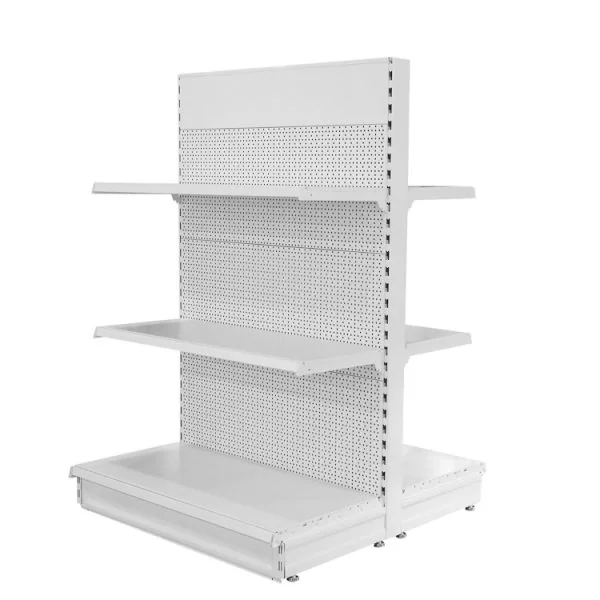
Supermarket Gondola Shelving
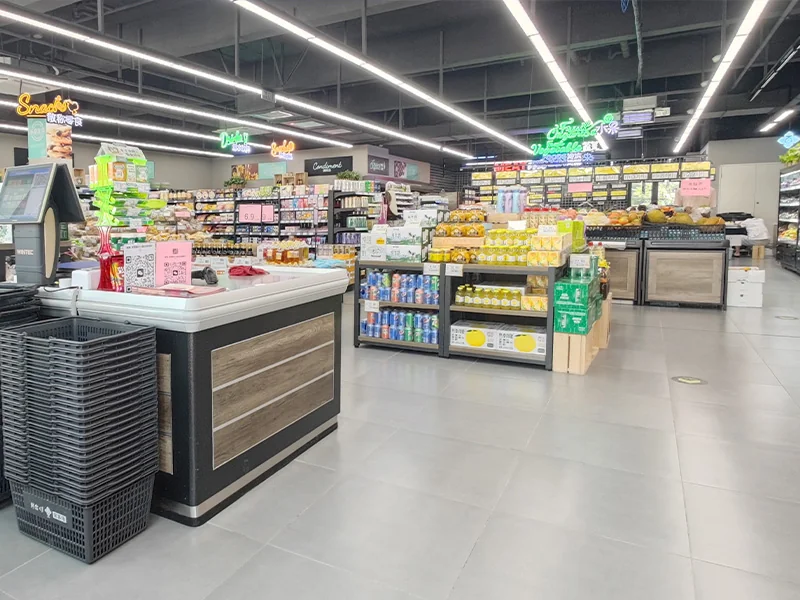
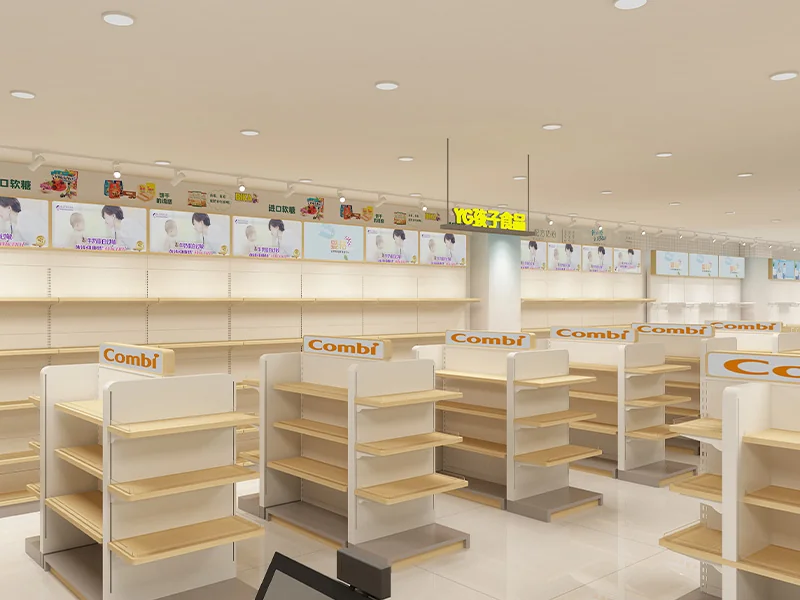
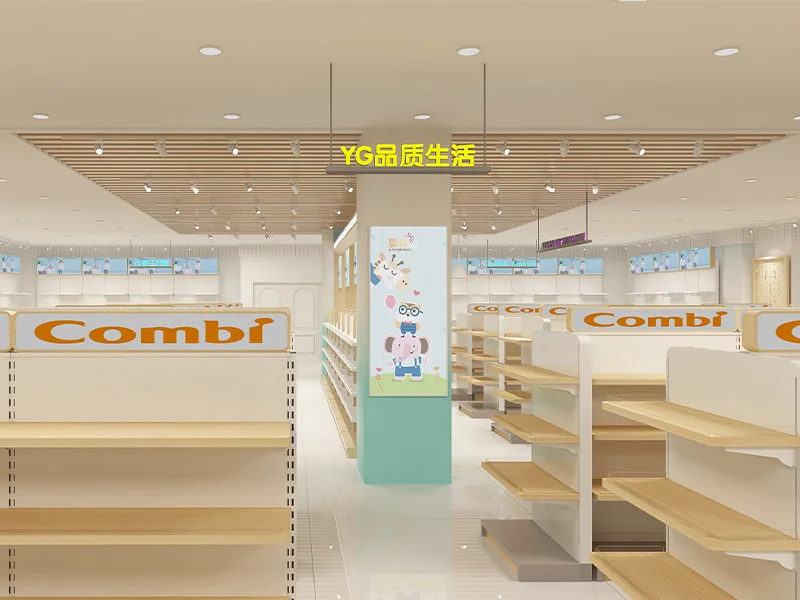
Double sided gondola runs down the middle of the aisle, single sided against the wall. Shelf pitch is adjustable, so the same bay handles cereal boxes and detergent bottles as the planogram changes.

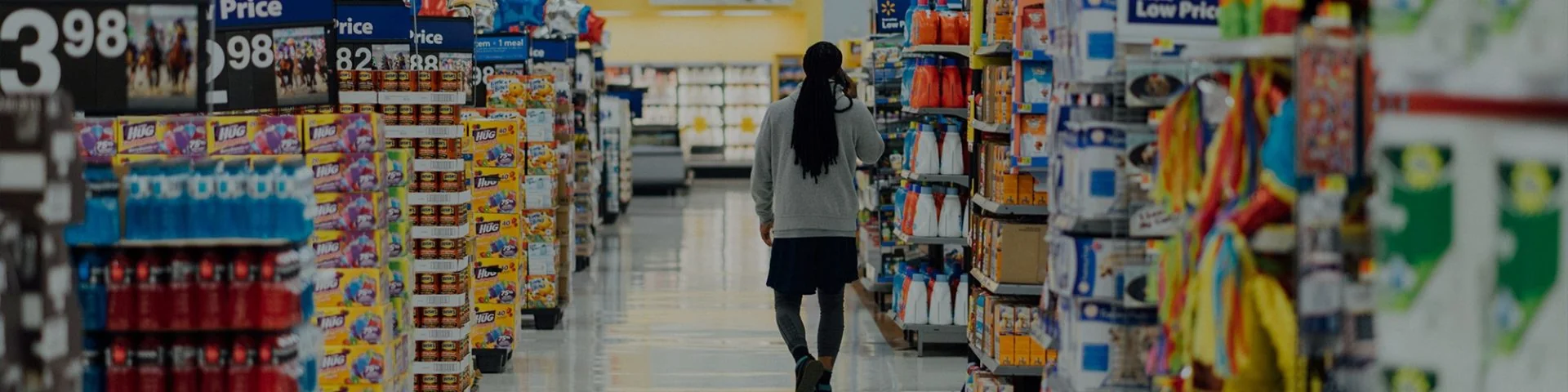
Gondola runs, checkout counters, trolleys and stockroom racking, sized to one aisle plan and shipped together.
A grocery store is not one fixture problem, it is four that have to agree with each other. The gondola runs set the aisle width, the aisle width sets which trolley fits, the trolley sets how much room the checkout lane needs, and whatever the stockroom holds has to reload the shelves without crossing the shop floor. JTD Jinta supplies all four lines from one plant in Changshu, which is why the sizes line up when the container is unpacked.
Each line below does one job on the floor. They are listed in the order the decisions have to be made, because each one constrains the next.
Double sided gondola runs down the middle of the aisle, single sided against the wall. Shelf pitch is adjustable, so the same bay handles cereal boxes and detergent bottles as the planogram changes.
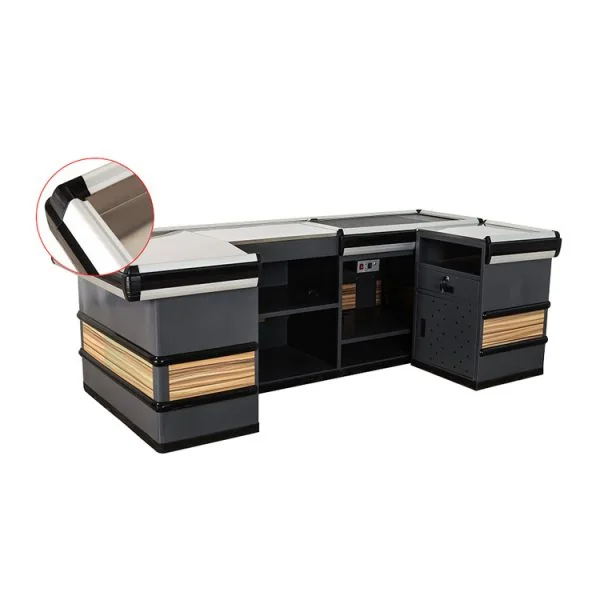
Counter length decides how much belt and bagging space each lane gets. We build them to match the shelving finish so the front of store does not look assembled from two suppliers.
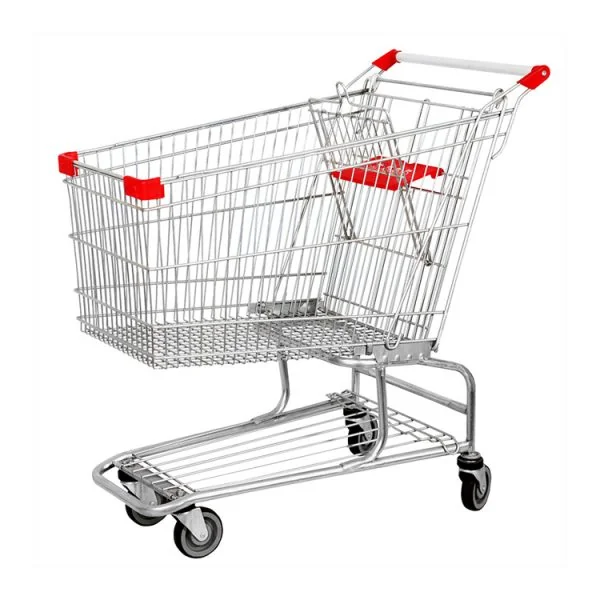
Trolley width has to clear the aisle with a second trolley passing. Get this wrong and customers abandon full trolleys mid-aisle, which is a revenue problem, not a fixture problem.
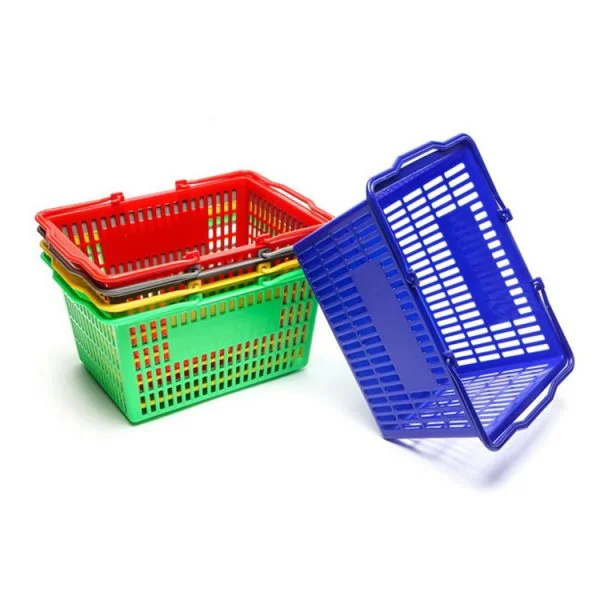
Baskets at the entrance capture the top-up shopper who would otherwise carry three items by hand and stop at three.
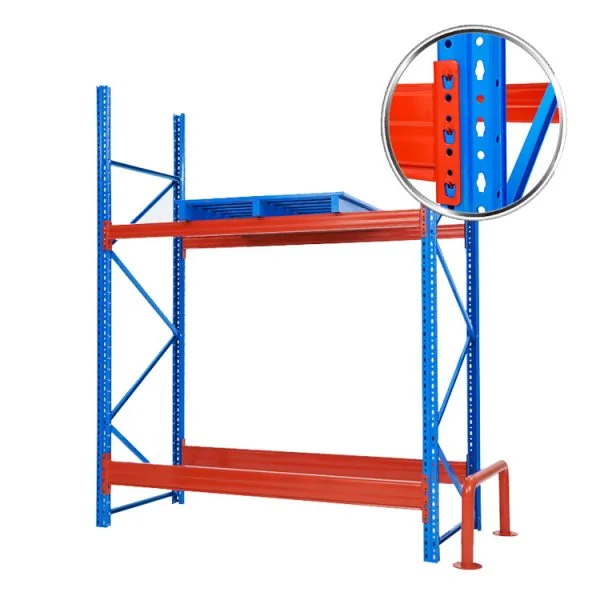
Back-of-house racking sized so a full pallet lands where the replenishment trolley can reach it, not where it has to be broken down twice.
A 1,200 mm aisle with 400 mm deep gondolas on both sides leaves enough room for two trolleys only if the trolleys are under 550 mm wide. Decide the aisle first, then the shelf depth, then the trolley. Doing it in the other order is the most common reason a fit-out has to be re-cut on site.
A double sided gondola run presents twice the facing for roughly the same floor area as a single sided run against a wall. Wall runs are for the perimeter, where you have the wall anyway.
Checkout counters are the one fixture every customer stands at. Ordering them from a different supplier than the shelving usually means a different powder coat white, and the mismatch is visible from the door.
Racking that holds more but sits further from the shop floor door costs staff hours every single day. Depth and bay height should follow the replenishment route, not the maximum the room could physically take.
Fit-outs supplied with JinTa fixtures in Saudi Arabia, China. Tap any photo to enlarge.
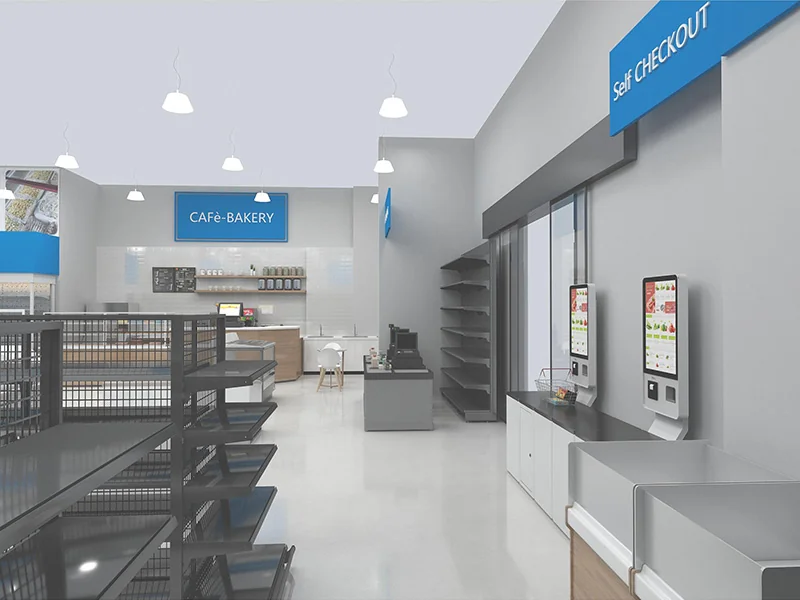
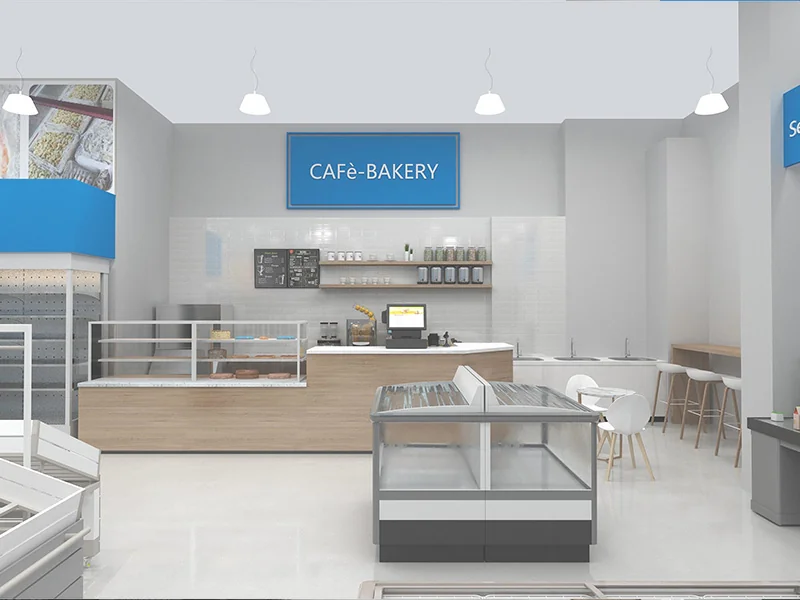
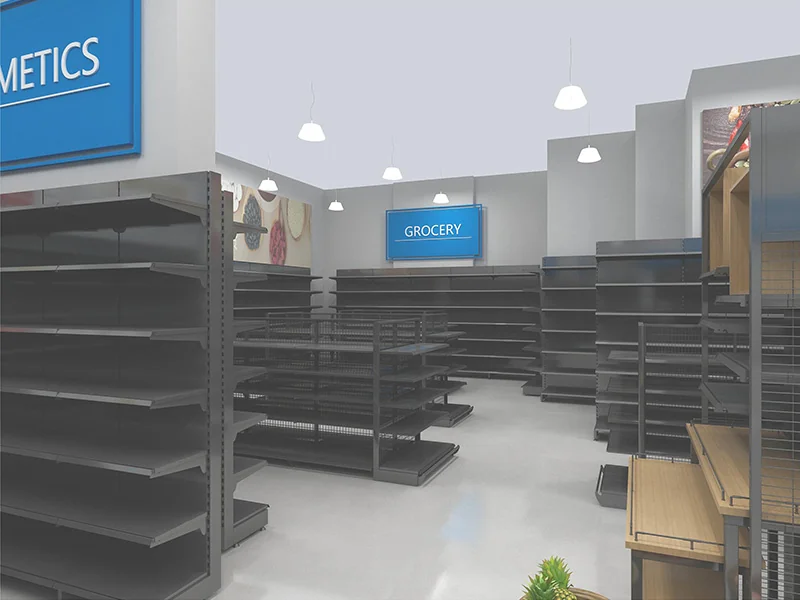
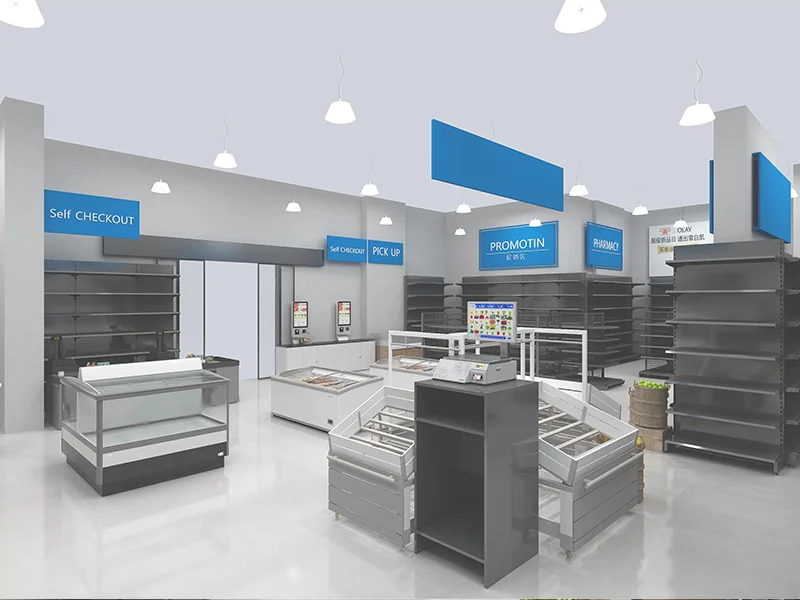
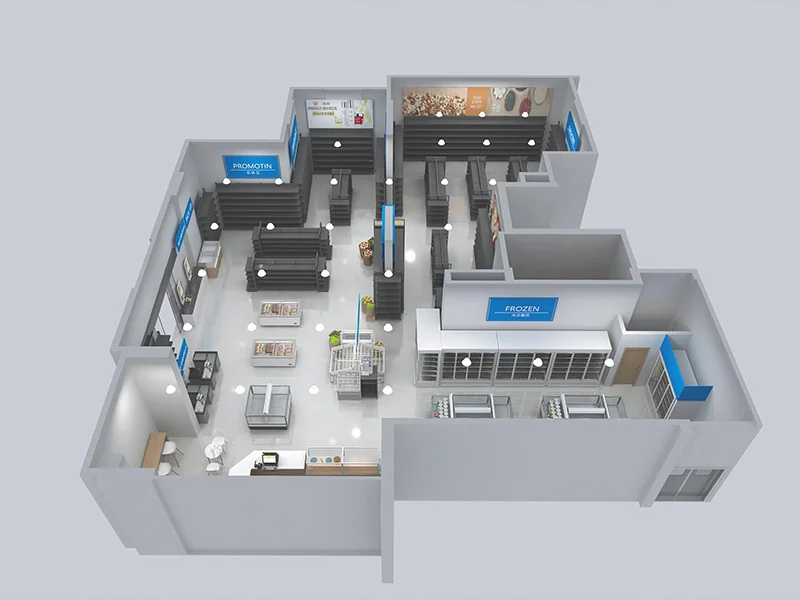
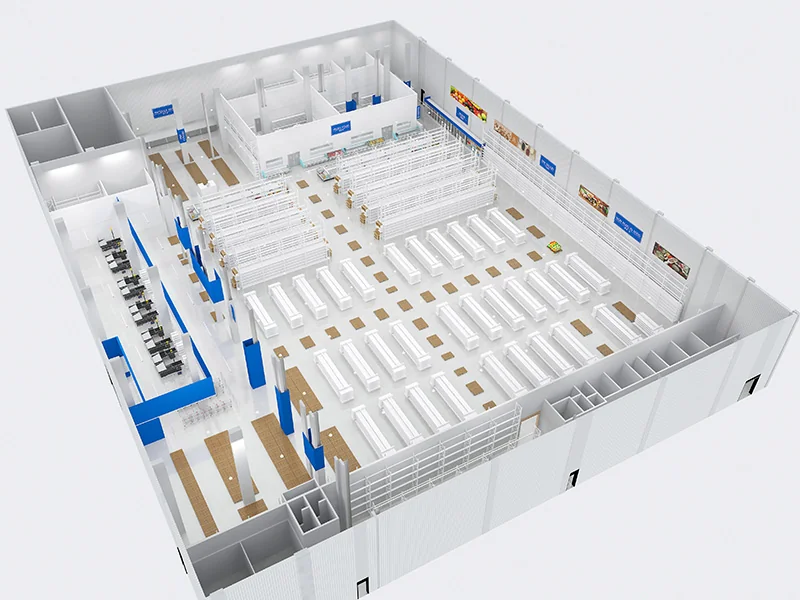
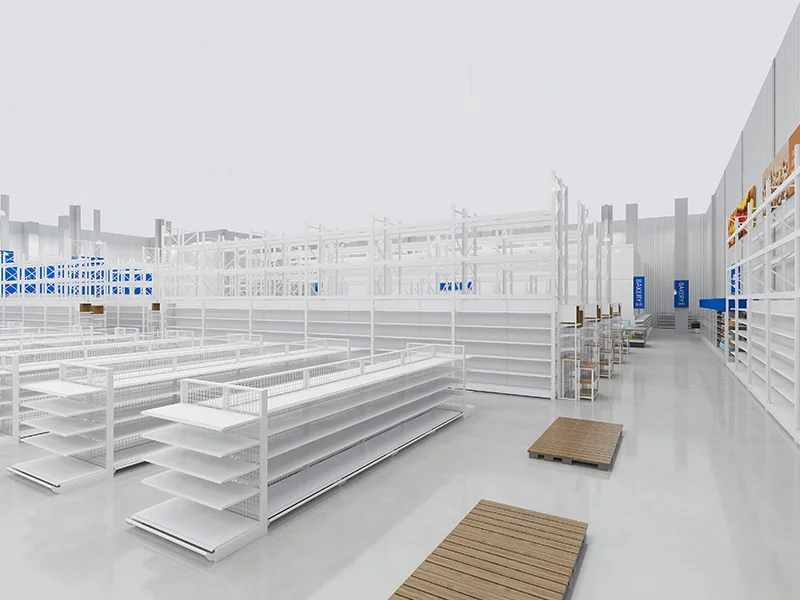
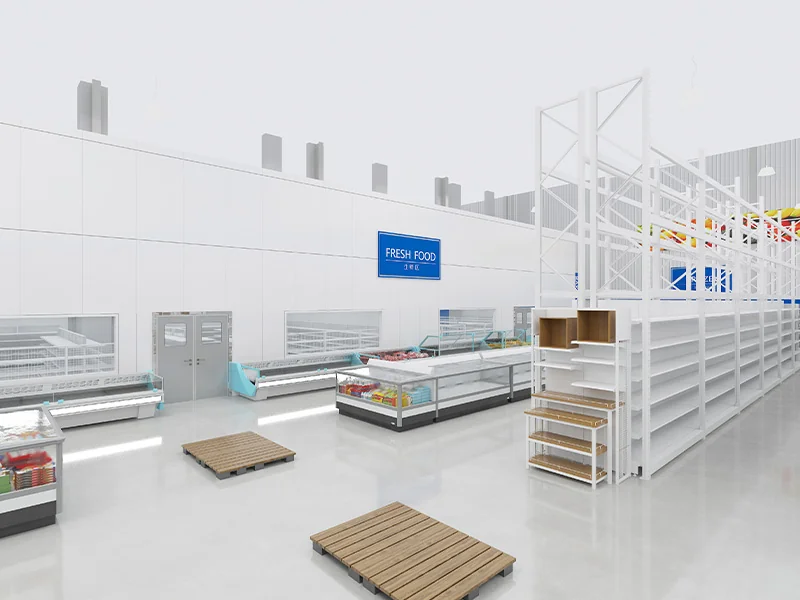
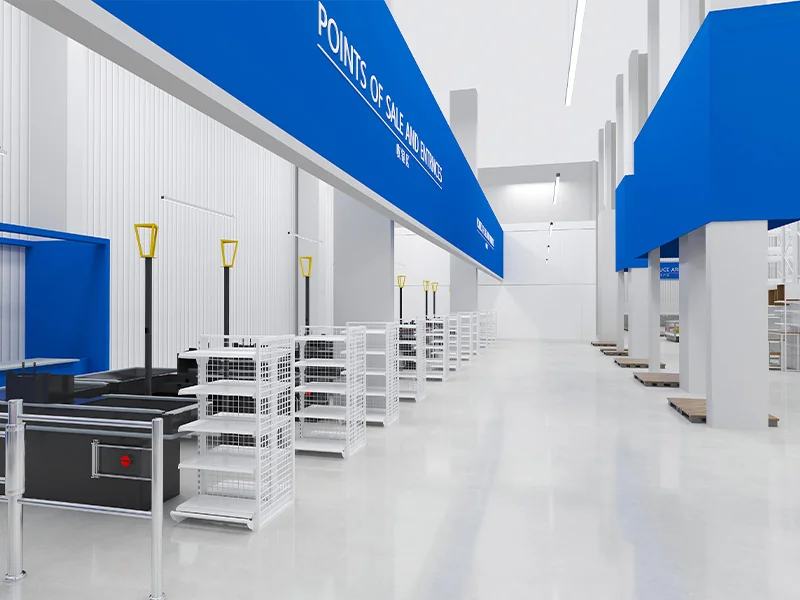
Same plant, same four-line logic — what changes is the configuration. A convenience store needs the same gondola in a shallower depth; a fashion floor swaps shelves for rails. Pick the format closest to yours.
The same gondola systems as a supermarket, configured shallower and shorter for a small footprint.
Shelving, display fixtures and counters powder coated to your colour, held to one spec across a chain rollout.
Browse by fixture instead of by store type: gondola shelving, racking, trolleys, baskets, counters and wire containers.
Almost all of them use gondola shelving: a free standing steel frame with a solid or perforated back panel and shelves that clip in at adjustable heights. Runs go double sided down the middle of aisles and single sided against perimeter walls. Everything else in a grocery store, from the checkout counter to the stockroom racking, is built around where those runs sit.
Cost tracks the number of bays, not the floor area, so the first thing to fix is the aisle plan. Our minimum order is 20 units per fixture type and lead time is 10 to 30 days from a confirmed drawing. Send the floor plan and we will come back with a bay count and a container plan rather than a price per square metre, which is not how this is quoted.
Most sales floors run 1,800 to 2,100 mm so the top shelf is still reachable by an average shopper. Warehouse-format stores go taller and accept that the top level is display or reserve stock rather than pick face. Shelf pitch inside the bay is adjustable in either case.
Yes, and that is the point of ordering from one plant. The aisle width, trolley width and checkout lane width are the same measurement problem seen from three angles. Ordering them separately is how stores end up with trolleys that do not pass each other.
Yes. Smaller stores usually need shallower gondolas and shorter runs rather than a different product. See our convenience store page for how the configuration differs.