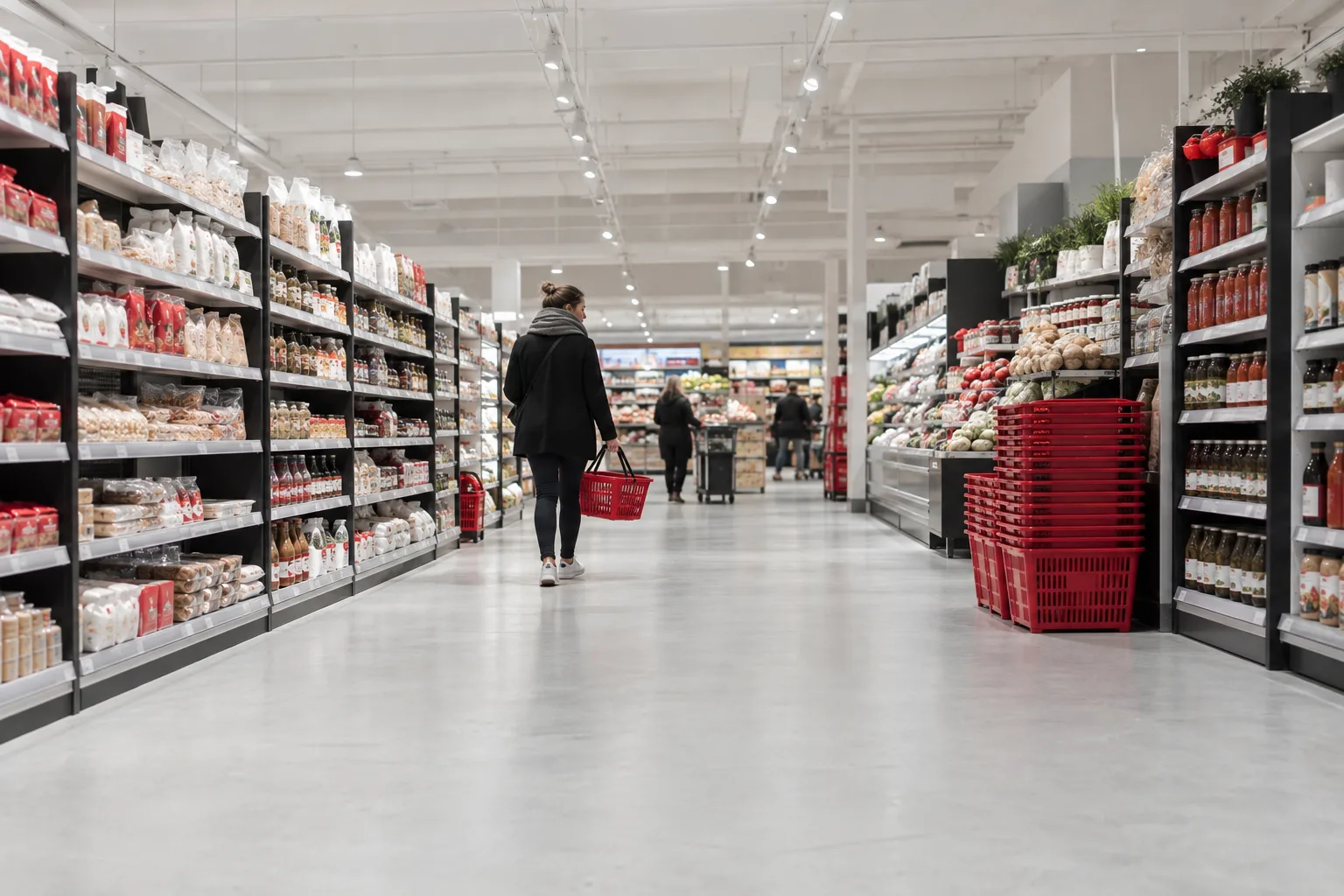
If you are fitting out a shop, you will hear the word gondola long before anyone explains it. Suppliers use it, store planners use it, and the quotation you receive may list a dozen of them. What is a gondola in a retail store, then, and how is it different from the other shelving on a price list?
The short version is that a gondola is the standard aisle fixture of the modern shop. It is the row of tall steel shelving you walk beside in a supermarket, a pharmacy or a convenience store. It is a fixture and not a piece of furniture, because it is designed to be bought in bays, joined into long runs, restocked all day and reconfigured when the range changes.
This guide explains what the word means, what a gondola is made of, the four forms it takes on a shop floor, where the name comes from, what it is called in different countries, and how to choose one. It stays on definitions and choices. For exact bay lengths, shelf depths and aisle widths, read our companion guide on gondola shelving sizes.
What Is a Gondola in Retail, in Plain Terms
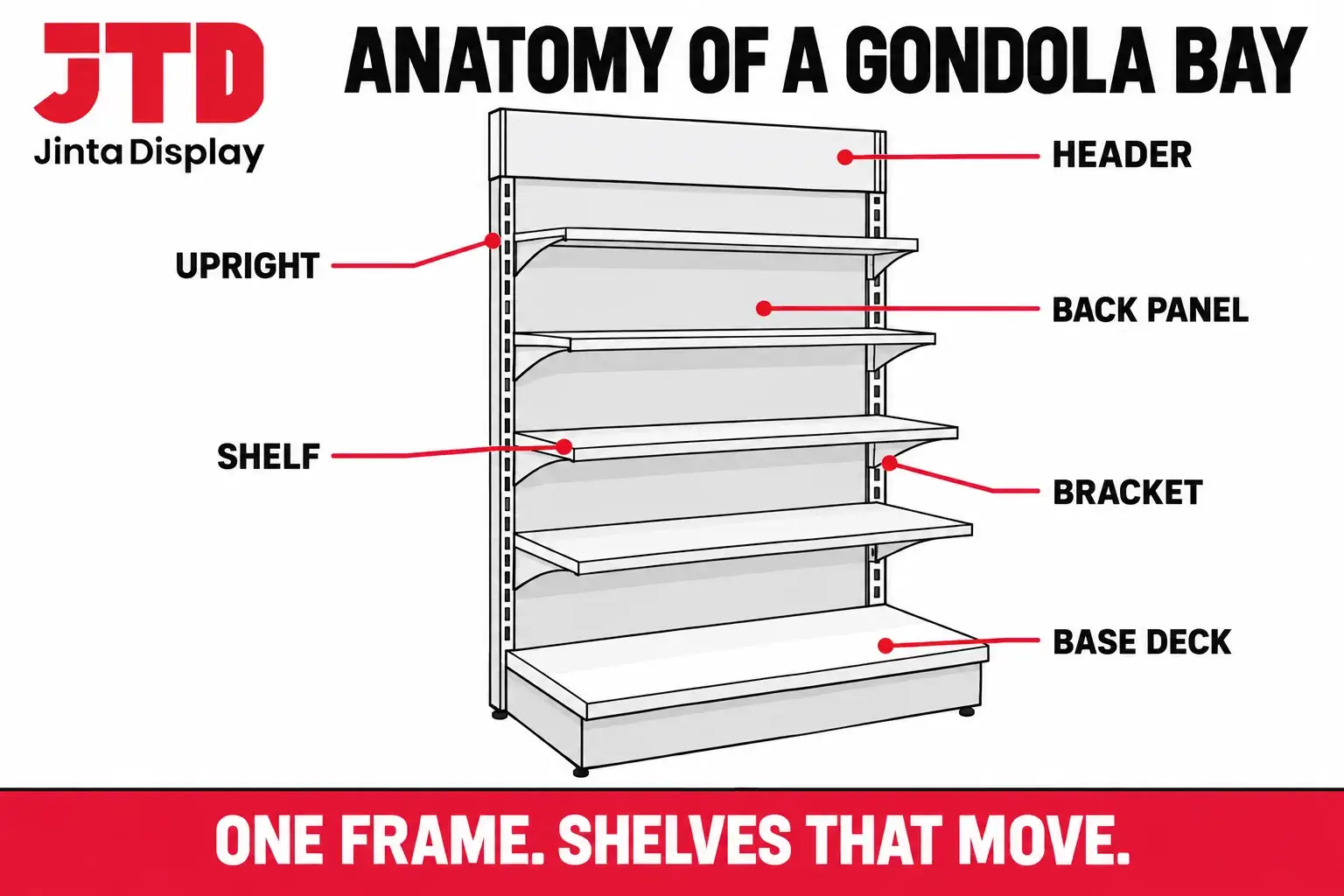
A gondola is a modular, freestanding retail shelving fixture. Each bay has two vertical uprights joined to a base at the floor, a back panel between the uprights, and a set of shelves carried by brackets that hook into slots in the uprights. Because the brackets can move from slot to slot, the same bay can hold tall bottles on one tier and shallow boxes on another, and the gaps between shelves can change when the stock does.
Three features make a gondola what it is. It is freestanding and carries its own weight, needing no wall for support. It is modular, and bays join end to end to make a run of any length. It is adjustable, with shelf heights that are not fixed at the factory. A shelf bolted to a wall at one height is wall shelving, and a fixed cabinet is a display case. The combination of free-standing, modular and adjustable is what retailers mean by a gondola.
People also ask what are gondolas used for in a store, and the answer is almost everything in the aisle. Packaged food, drinks, household goods, personal care, stationery, hardware and pharmacy lines all sit on them. Where the product is small and light the shelves are shallow and close together. Where the product is heavy the base deck is deep and the upper shelves step back.
What a Gondola Is Made Of
Knowing the parts helps you read a quotation, because each one is priced and specified separately.
Base. The base sits on the floor and carries the uprights. It usually includes a base deck, which is the lowest shelf, set slightly off the floor on a plinth. The base deck is deeper than the shelves above it because it carries the heaviest goods and passes load straight into the floor.
Uprights. Two vertical steel columns per bay, each punched with slots at a regular spacing. The slots are what the brackets hook into, and their spacing is called the pitch. Pitch is the detail that decides whether parts from two makers can be mixed, which is why the sizes guide spends so long on it.
Back panel. A steel sheet between the uprights. A plain panel gives a clean face. A perforated panel, often called a hole back, takes pegs and hooks as well as shelves, and one run can then carry shelf stock and hanging stock together.
Shelves and brackets. Each shelf is a formed steel panel carried by a pair of brackets. Shelf depth and panel thickness set how much weight a shelf takes and how much it sags. Brackets set the rest of the load rating.
Accessories. Canopies and header boards for signage, end panels to finish a run, shelf dividers and price strips, lighting rails and peg hooks. These change what a bay looks like without changing its frame.
How a Gondola Carries Its Load
A gondola looks light but carries a lot, and understanding how helps you ask the right questions about load.
Each shelf hangs from two brackets whose hooks sit in the upright slots. The weight of the goods acts on the brackets as a bending force, a bit like a diving board with a bag on the end. A deeper shelf puts the weight farther from the upright, and the same bracket carries less. That is why the published load rating per shelf goes down as shelf depth goes up, and why a manufacturer who quotes one number for every depth has told you very little.
The base deck behaves differently. It sits on the floor and passes its load down through the base, not out through the brackets, and it can be rated far higher than the shelves above it. That is also why the heaviest goods belong on the base deck and the lightest on the top tier.
Two other parts matter more than they look. The upright wall thickness decides whether the slots stay true after years of moving brackets. The shelf panel thickness decides whether the shelf sags under dense goods such as tins and bottled drinks. When a quotation says heavy duty, ask which of the four thicknesses it applies to, which are the upright, the shelf, the bracket and the back panel. The sizes guide sets out typical ranges for each.
The Four Forms a Gondola Takes on the Floor
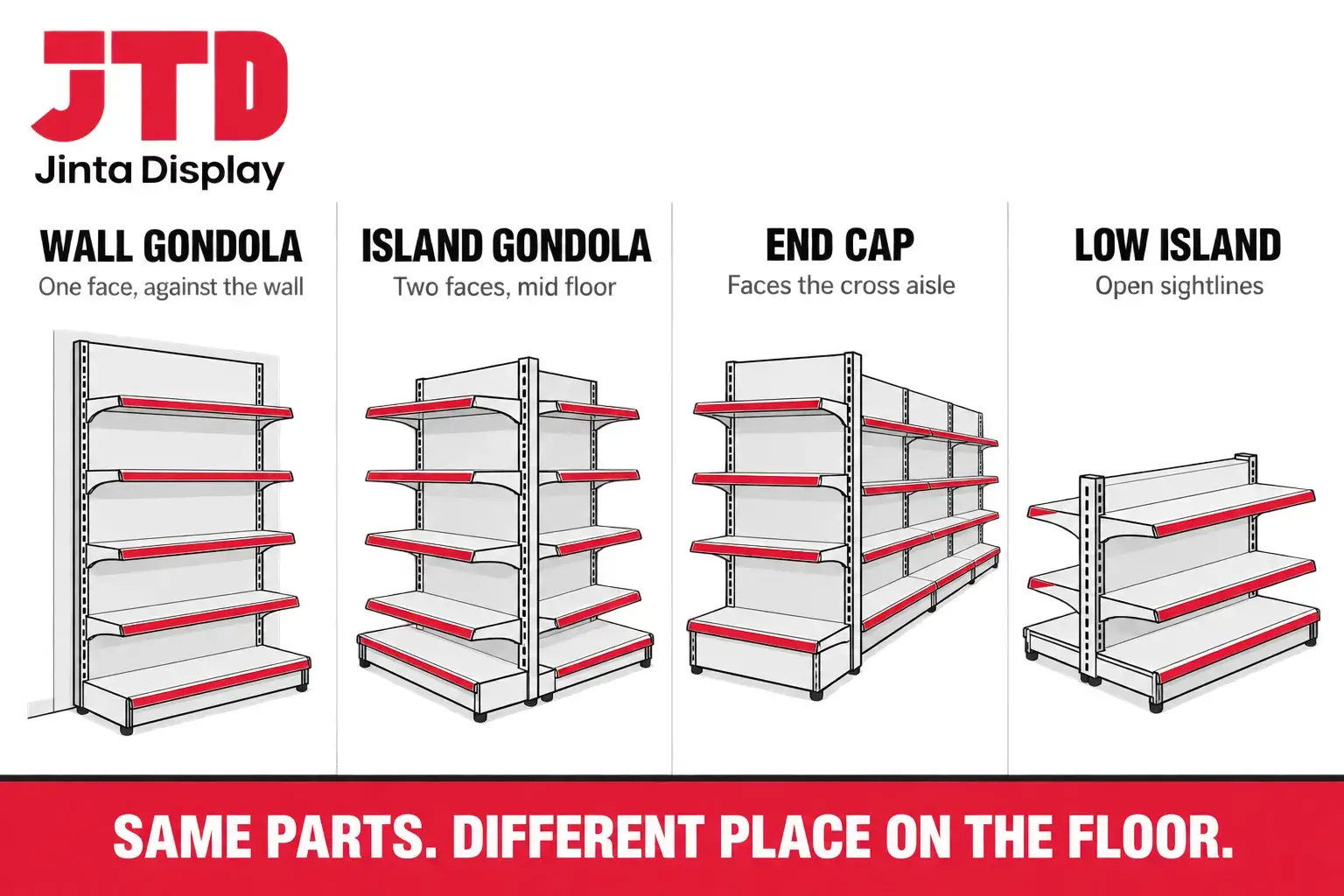
The same set of parts is arranged four ways. Most shops use all four, and each has its own name in the trade.
| Form | Faces | Where it goes | What it is used for |
|---|---|---|---|
| Wall gondola | One | Against the perimeter wall | The full range, shelved from floor to above head height |
| Island gondola | Two | Down the middle of the floor, back to back | Main aisles, with shoppers pulling from both sides |
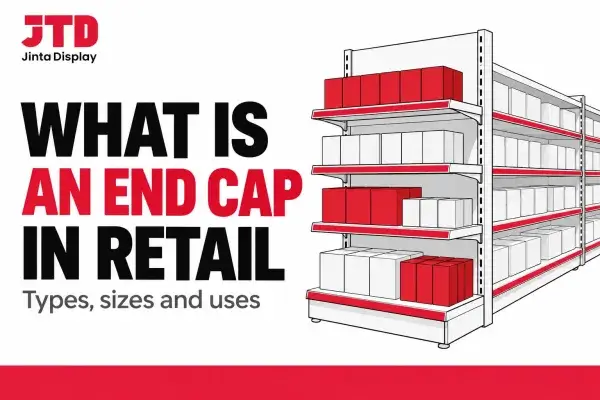
| End cap | One or two | At the end of an island run | Promotions, seasonal lines and impulse items |
| Low island | Two | Front of store or around the checkout | Impulse items, with sightlines kept open across the floor |
The wall gondola is single-sided. The back panel faces the wall, and every shelf faces the aisle. It holds the widest range because the wall is the longest unbroken line in most shops.
The island gondola is double-sided, with two sets of shelves on a shared base and a shared back panel in the middle. It is what most people picture when they ask what is a gondola in a retail store. Its footprint depth is roughly twice the depth of a single shelf, which is worth remembering when you plan aisles.
The end cap finishes a run. It faces the cross aisle, which puts it in front of shoppers as they walk toward the run. Because it is the first thing they pass, retailers use it for promotions and new lines.
The low island is a short double-sided run, often at 1,200 to 1,400 mm high, placed where staff or shoppers need to see across the floor. It is common near entrances and checkouts.
Where the Name Comes From
Nobody has documented the first use of the word, which leaves the explanations as trade stories and not record. The first says the fixture looks like a gondola, the flat-bottomed Venetian boat, since a double-sided island run has a broad flat base with a structure rising from its middle. The second traces it to the railroad gondola car, an open wagon with low sides, because early store fixtures were low and open. Both circulate, and neither has a source behind it.
What matters in practice is that the word spread and the standard did not. Gondola became the usual American term for this fixture type. Elsewhere the same object has other names, and a few of them are worth knowing before you search for a supplier.
| Where | Common names |
|---|---|
| United States and Canada | Gondola shelving, retail gondola, gondola shelves |
| United Kingdom and Ireland | Shop shelving, shopfitting gondola, gondola bay |
| Australia and New Zealand | Gondola shelving, shop shelving, shopfittings |
| Asia, Middle East and Africa | Supermarket shelving, supermarket shelf, store shelving |
| Latin America (Spanish) | Góndola, góndola para supermercado, anaquel |
The Spanish word deserves a note. In much of Latin America góndola is the everyday word for an aisle shelving unit in a supermarket. A buyer there who writes góndola and a buyer in Ohio who writes gondola are asking for the same thing. The risk comes from the word alone. Gondola on its own also means a boat, a ski lift and a railcar. A specification sent overseas should say gondola shelving in full and name the slot pitch.
Gondola Compared With Other Fixtures
Many quotations list gondolas beside other racks and shelves, and it helps to know where the line falls.
| Fixture | How it differs from a gondola |
|---|---|
| Wall shelving | Fixed to the wall and not freestanding. Shelf height often adjusts, but the wall carries the load. |
| Slatwall and pegboard | A display surface on a wall or panel. Holds hooks and small shelves, not heavy stock. |
| Boltless rivet shelving | Hand-loaded steel shelves that clip together without bolts. Built for storage and back rooms, not for a sales floor. |
| Pallet racking | Forklift-loaded frames for pallets. A warehouse system, not a retail aisle fixture. |
The boundary matters when you buy. A gondola is built for shoppers to reach, with a clean face, shallow adjustable shelves and a rated load that suits retail packaging. If you are loading cartons by hand in a stockroom, our boltless rivet shelving is the better fit. If you are loading pallets with a forklift, look at warehouse racking.
Why Retailers Use Gondolas
The same few reasons come up in almost every store.
The shelves move. A range changes. Bottles replace boxes, a promotion needs a deeper shelf, a category shrinks. On a gondola, you move brackets to new slots and the bay changes in minutes. A fixed cabinet would need to be replaced.
The bays join. A run is built one bay at a time, and a shop can start with six bays and add six more next year. Matching the new bays to the old ones is a question of slot pitch and profile, which is why the pitch should go on every order.
One frame, many roles. The same upright takes a plain back or a hole back, a wall position or an island position, a canopy or none. A store with a dozen departments can run one family of fixtures across all of them.
The cost per facing is low. A facing is one product width at the front of a shelf. A gondola puts many facings in a small footprint, from a steel frame that is cheap to ship and easy to install.
Restocking is quick. Shelves sit at a height staff can reach, and a whole bay can be reset from the aisle without moving the frame. A store that changes its range often, or runs frequent promotions, feels this saving every week.
What Is a Gondola in Retail Used For, by Store Type
The fixture is the same everywhere, but the setup changes with the goods.
Supermarkets and grocery stores. Island gondolas in the main aisles with deep base decks for heavy goods, wall gondolas around the perimeter and end caps for promotions. Typical height is 1,800 mm, with taller wall runs where the ceiling allows.
Convenience stores. Shorter and shallower bays, 600 to 900 mm long, because the floor is small and the aisles are narrow. Four or five tiers of small packaged goods.
Pharmacies and cosmetics. Lower runs with more tiers at closer spacing, because the products are small and the staff need to see across the floor.
Hardware and tools. Deeper shelves and heavier brackets, often with a hole back for hanging items on pegs next to boxed goods.
Exact depths and heights for each of these are in the sizes guide.
Planning a Run, From Bays to Finishing Pieces
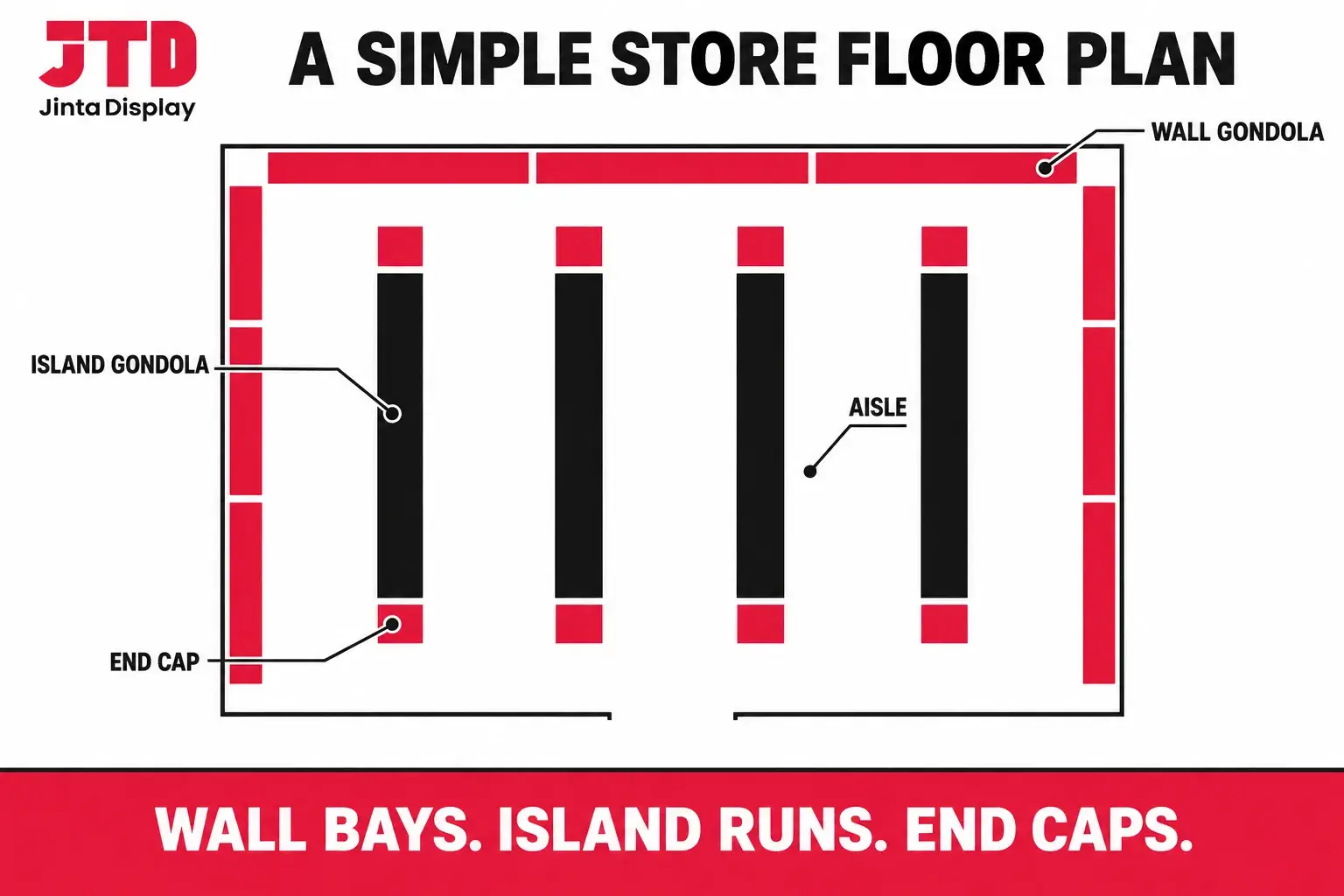
A gondola is bought as a run, and a run is more than a row of identical bays. Planning one properly saves a second order.
Start with the length of the wall or aisle and divide by the bay length. A 12 m wall with 1,200 mm bays holds ten bays, and a 12 m island run holds the same ten on each face but shares the base in the middle. Add the finishing pieces next. Each end of a run needs an end panel or an end cap so the uprights are covered and the shelf ends look finished. A run of ten bays therefore needs two end finishes, and a block of four island runs needs eight.
Then choose the accessories. A canopy or header board on top gives you a place for signage and category names. Price strips along the shelf edge hold labels. Dividers keep rows of small products straight, and lighting rails go where the goods need to be seen. Each of these is priced separately, so list them with the quantities.
Finally check the floor. A floor that is out of level shows up as a run that leans or a shelf that tilts. Check the floor before the run is installed and not after the stock is loaded.
Materials and Finishes
Most gondolas are cold rolled steel with a powder coated finish, which gives a hard, even surface that resists scuffs from trolleys and stock cages. White and black cover most stores, and other colors are made to order.
Steel is not the only option for the visible parts. Some of our listings pair steel frames with wood panels for a warmer look in specialty and gift stores. The frame and the load rating stay the same, and only the finishing pieces change. Whatever the finish, the frame is what carries the load, so it is the part to specify with care.
Our product pages describe the frame as self-supporting and installation as simple, with plastic film and steel strap packing for container shipping. The exact specification of a given order is confirmed with the quotation.
A Short Glossary for Reading a Quotation
Anyone searching what is gondola in retail store language will meet a handful of terms that new buyers rarely hear explained.
Bay. One section of a gondola between two uprights. Quotations price and count bays.
Run. A row of bays joined end to end, with finishing pieces at both ends.
Facing. One product width at the front of a shelf. Retailers judge a gondola by the number of facings it offers in a given footprint.
Pitch. The spacing between slots in the upright. It sets how finely shelves can be adjusted and whether parts from different makers fit together.
Base deck. The lowest shelf, deeper and stronger than the rest, standing just above the floor.
End cap. A display unit at the end of a run, facing the cross aisle.
Canopy or header. A panel above the top shelf for signage and lighting.
Planogram. The drawing that says which product goes on which shelf. It decides shelf heights and depths, so it should be drawn before the order is finalized.
How to Choose a Gondola
Six questions settle most choices. Answer them before you ask for a price.
What goes on the shelf, and how heavy is it. Dry grocery, drinks and household goods need deeper shelves and stronger brackets than cosmetics or stationery. Ask for the rated load per shelf at the depth you plan to use, because load falls as depth rises.
Single-sided or double-sided. Walls take single-sided bays. The middle of the floor takes double-sided islands. Decide the split on the floor plan before choosing a depth, because an island footprint is about twice a shelf.
Plain back or hole back. A plain back gives a clean look and a stiff bay. A hole back takes pegs and hooks, so you can mix shelf and hanging stock. Our hole back gondola shelving is built for that mix.
Does it have to match what you already own. If the store already runs a Lozier profile, new bays must match the profile and the pitch. Our Lozier compatible double-sided gondola is built to Lozier profiles so the uprights interchange with an existing run. If you are starting fresh, choose one pitch and keep it.
Finish and color. Powder coat in white or black covers most stores, and other colors are made to order. A dark single-sided run, such as our Lozier style black wall bay, reads as one dark line down a wall.
How many, and how soon. Our supermarket shelving is made to order in Changshu with a minimum of 20 units and a lead time of 10 to 30 days, confirmed with each order. Size, color and logo are customized to the store.
Mistakes First-Time Buyers Make
These come up often enough to be worth listing.
Ordering by nominal length. A bay called 1,200 mm may measure differently from upright center to center, and an inch-based system adds width at the run ends. Confirm the real run length before cutting the floor plan.
Mixing pitch. Two systems with a similar look can have different slot spacing, and then no bracket fits both. Name the pitch on the order, and photograph any existing upright you need to match.
Using one depth for the whole bay. A flat bay gives up capacity at the bottom and visibility at the top. A stepped profile with a deeper base deck is the normal answer.
Forgetting the finishing pieces. End panels, end caps and canopies are separate lines and easy to leave off a first quotation.
Treating the load rating as one number. Ask for the rating at the depth you will use, and remember that the base deck rating does not apply to the shelves.
Buying the heaviest option everywhere. A pharmacy run of light packs does not need the bracket a beverage run needs. Match the build to the goods and keep the budget for the places that need it.
What We Build
We have built shop fittings in Changshu since 1998, and gondola shelving is the backbone of that range. The line covers single-sided wall bays and double-sided island runs in the Lozier compatible, hole back and S50 systems, in metal with adjustable shelf pitch and your choice of color and branding. It sits beside checkout counters, shopping trolleys and baskets from the same plant, so a whole store can be fitted out to one specification. The complete line is in supermarket gondola shelving. The sales point beside the shelving is covered in what is a cash wrap, and the full list of fixtures for a new shop is in our supermarket equipment list.
If you are planning a store, send us your floor plan and what each aisle will carry and we will reply with a specification and bay count.
Frequently Asked Questions
What is a gondola in retail?
A gondola is a freestanding, modular shelving unit used as the main aisle fixture in shops. Each bay has a floor base, slotted steel uprights, a back panel and shelves on adjustable brackets. Run against a wall it is a single-sided wall gondola, and run back to back down an aisle it is a double-sided island gondola.
What are gondolas used for in a store?
They hold the range. Packaged food, drinks, household goods, personal care, hardware and pharmacy lines all sit on gondolas. End caps at the ends of runs carry promotions and seasonal lines, and low islands near the entrance carry impulse items while keeping sightlines open across the floor.
What is gondola shelving?
Gondola shelving is the full shelving system that makes up a gondola, meaning the base, uprights, back panel, shelves and brackets, sold in bays that join into runs. The word shelving stresses the modular, adjustable system, while gondola alone can also mean a boat or a ski lift.
What is the difference between a gondola and a regular shelf?
A regular shelf is fixed, often to a wall, and does not move. A gondola is freestanding, built in bays that can be joined and rearranged, and its shelves slide to new heights on brackets. That is why stores use gondolas where the range changes and wall shelves where it does not.
What is a gondola in a retail store called outside the United States?
In the UK and Ireland it is usually shop shelving or a shopfitting gondola. In Australia it is gondola shelving or shop shelving. Across Asia and the Middle East buyers say supermarket shelving, and in much of Latin America the Spanish word góndola is the everyday term for the same fixture.
What is the difference between a wall gondola and an island gondola?
A wall gondola is single-sided and stands against a wall, so shoppers reach it from one side. An island gondola is double-sided and stands in the middle of the floor, so shoppers reach it from both sides. The frame is the same, but the island has two sets of shelves and about twice the footprint depth.
How do I choose gondola shelving for a new store?
Start with what goes on the shelves, because weight sets shelf depth and bracket rating. Then decide single-sided or double-sided, plain back or hole back, and whether the new bays must match existing ones. Fix the slot pitch before you order, and confirm the rated load for the depth you plan to use.
Can gondola shelving be customized?
Yes. Heights, bay lengths, colors, back panel types and logos can all be customized. Slot pitch is the one thing not worth changing, because a non-standard pitch means no standard shelf, bracket or extension will fit later. We make ours to order with a minimum of 20 units.